|
||||||||||||||||||||||
IVF and Fertility Specialists Clinic
|
||||||||||||||||||||||
|
|
Egg Donation Cost - full money back guarantee pricing optionAdvanced Fertility Center of Chicago
|
|||||||||||||||||||||
|
$35,500 covers up to 4 fresh donor egg cycles Most money back plans only cover 3 fresh attempts |
|
100% of
$35,500 fee refunded if you do not
have a live birth |
There are few treatments in medicine that have such a clearly identifiable measure of outcome (a baby is born or not) as in vitro fertilization. This allows the possibility of outcome-based fee schedules. We offer a pricing option with a 100% refund of the fee for the IVF cycle (medications not included) if you do not deliver a baby. Some centers that offer a money back guarantee plan allow only 3 attempts using fresh embryos. Our program gives the couple up to 4 cycles with fresh embryos - plus any and all associated frozen embryo transfer cycles.
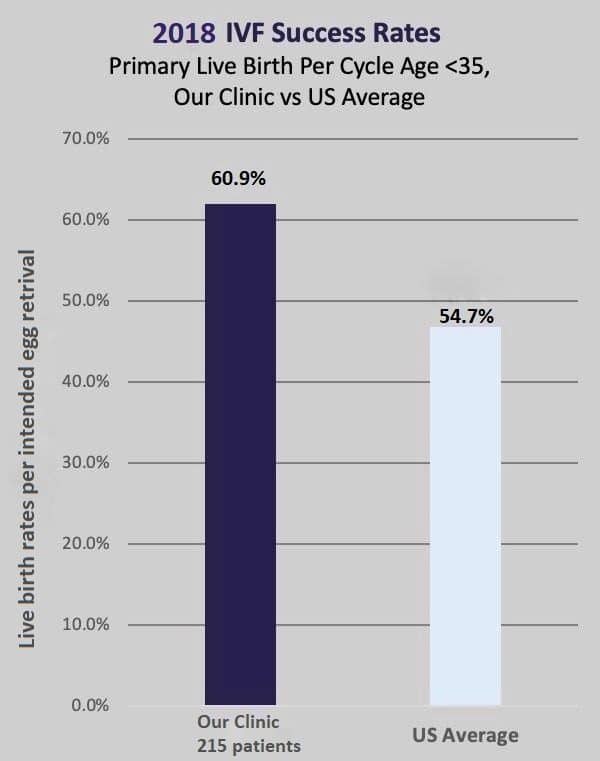
IVF programs must have confidence in their success rates in order to offer such a guarantee. We are not the only program with high pregnancy rates. However, some programs with good success rates have high fees. We offer the unusual combination of high success rates and reasonable fees. This combination makes our IVF and egg donation programs one of the most cost-effective in the country.
SART and the CDC report annually to the public on IVF clicic success rates. This information allows consumers needing IVF treatments to compare (and validate) success rates from all reputable IVF and egg donation clinics.
Details about our 100% money-back cost plan for egg donation
| Using Donor Eggs (Donors under age 33) | ||
| Single
cycle of donor egg cost
We use 1 donor for each recipient |
$14,150 + Administrative donor cycle fee ($3500) + Donor fee ($7,000) + donor medical insurance fee ($350) = $25,000 | |
|
Egg Donation Shared Risk Plan
We use 1 donor for each recipient |
Refundable portion |
$26,000
refundable (80%) See details on Egg Donation Shared Risk page |
| Non-refundable portion for duration of risk-sharing | $6,500 non-refundable (20%) | |
| Additional non-refundable portion for each attempt using fresh donor eggs | Donor fee ($7,000) + donor insurance fee ($350) = $7,350 | |
|
100% Refund Plan
with donor eggs
We use 1 donor for each recipient |
Refundable portion | $35,500
fully refunded if no live birth achieved See details below |
| Non-refundable portion for each attempt using fresh donor eggs | Donor fee ($7,000) + donor insurance fee ($350) = $7,350 | |
To qualify for our 100% refund plan using donor eggs, a couple needs to meet the following requirements:
*We reserve the right to approve or deny entry into our guarantee programs on a case by case basis.
The program fee is $35,500. Each fresh cycle also will incur an additional $7,350 in nonrefundable donor charges. If, after up to 4 completed fresh egg donation cycles no live birth has resulted (and all available frozen embryos have been transferred), the full fee ($35,500) will be returned to the couple. If you get pregnant and have a baby, we keep the entire fee.
We reserve the right to terminate the patient's participation after each completed cycle (this is very rare). Likewise, the couple has the right to terminate its participation after each completed cycle (after all fresh and frozen embryos have been transferred).
The program must be completed within 18 months from the day of the first egg retrieval. As indicated earlier, each cycle corresponds to an ovarian stimulation of a donor followed by the surgical aspiration of the donor's eggs, their fertilization in the embryology lab followed by the transfer of embryos. If pregnancy is not achieved, the couple will usually speak with the physician to discuss a "frozen" embryo transfer (if applicable), or a repeat fresh egg donation cycle (after all frozen embryos, if any, have been transferred).
Donor medication costs are additional, unless the option is chosen that includes all donor meds ($3000 additional per cycle). Medications usually cost about $2000-4000 for the egg donor. Some donors will require higher doses of medications to stimulate sufficient egg production. Higher doses means increased medication cost. The recipient woman will also need medications which usually cost about $500-1000.