


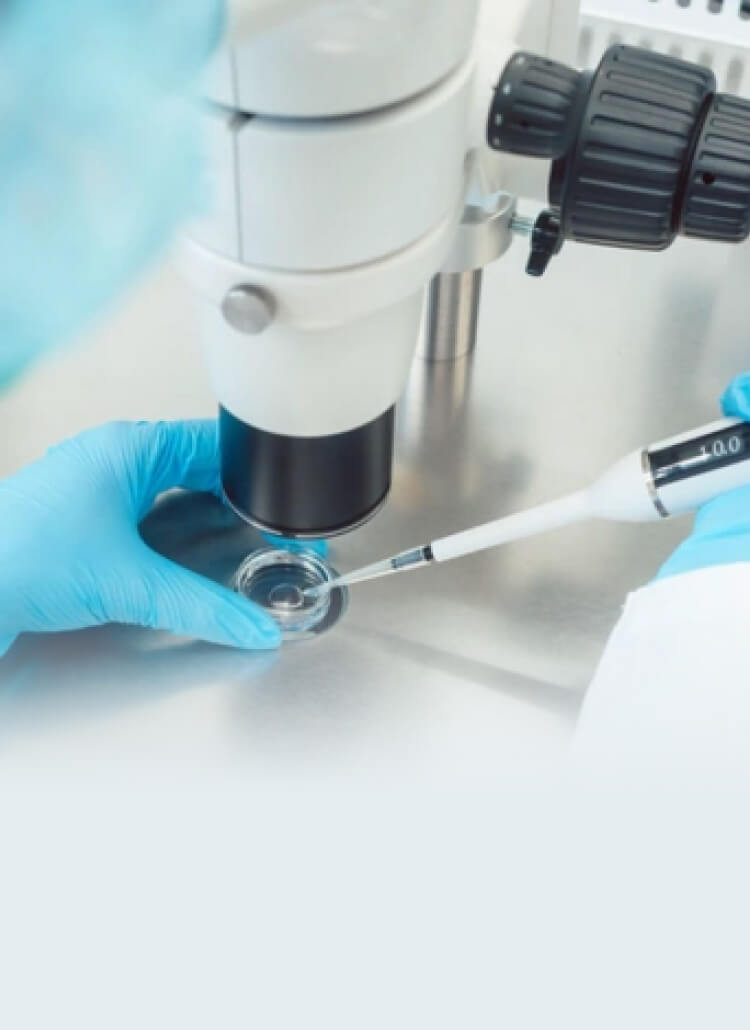
Assisted Hatching with IVF
Video Showing Assisted Embryo Hatching
Advanced Fertility Center of Chicago
In Vitro Fertilization – IVF Specialists
Video of assisted hatching procedure
Click play below to see a 30 second assisted hatching video
Assisted hatching in IVF
An 8-cell embryo in the process of assisted hatching
Holding pipette on left, hatching needle on right
As the shell (or zona pellucida) around the embryo is dissolved,
the needle is advanced to the left until a small opening is made
Assisted Hatching with IVF
-
The most commonly used indications for assisted hatching with an in vitro fertilization case are:
- Age factor – the female partner is older than 37
- Egg quantity and quality factor – cases in which the woman’s day 3 follicle stimulating hormone (FSH) level is elevated, or with a low AMH level or low antral follicle count
- Embryo quality factor – cases with poor quality embryos (excessive fragmentation or slow rates of cell division)
- Zona factor – cases with embryos that have a thick outer shell (zona pellucida)
- Previous IVF failure – cases that have had one or more previous failed IVF cycles
In our IVF clinic, we use assisted hatching for day 3 embryo transfers on just about all cases – because we think it increases the pregnancy and delivery rates.
-
- The embryo is held with a specialized holding pipette.
- A very delicate, hollow needle is used to expel the acidic solution against the outer “shell” (zona pellucida) of the embryo.
- A small hole is made in the shell by digesting it with the acidic solution.
- The embryo is then washed and put back in culture in the incubator.
- The embryo transfer procedure is done shortly after the hatching procedure.
- Embryo transfer places the embryos in the uterus where they will hopefully implant and develop to result in a birth.
Pregnancy rates
Pregnancy rates for in vitro fertilization procedures with assisted hatching have been shown in some published studies to be higher than for IVF without hatching. There is an improvement in the rate of embryo implantation and pregnancy in our IVF clinic with the use of assisted hatching. Apparently, this benefit is not seen in all IVF programs.It is possible to damage embryos with hatching and lower the pregnancy rates. Therefore, it is essential that if assisted hatching is done, it must be expertly performed by properly trained embryologists.
The actual pregnancy and live birth rates seen in an individual IVF center will vary according to the hatching technique used, the overall quality of the laboratory, the skill of the individual performing the hatching, the embryo transfer skills of the physician, and other factors.
Costs
IVF pricing pages have our current fees for IVF