


Male Fertility 101: What Every Man Should Know About His Reproductive Health
When it comes to fertility, much of the conversation centers on women. But male fertility plays an equally important role in conception — and it's a more common factor than many people realize. Male factor infertility contributes to roughly one-third of infertility cases and an important factor in up to half. Understanding male reproductive health is an essential part of any couple's path to parenthood.
Understanding Male Fertility
Male fertility comes down largely to the quality and quantity of sperm. A semen analysis measures several key parameters, and labs interpret them against reference values published by the World Health Organization (most recently in its 2021, 6th-edition manual):
-
Concentration (sperm count): Above 15 million sperm per milliliter of semen or more.
-
Motility (movement): Total motility of about 40% or higher, including at least about 30% of sperm moving progressively — that is, swimming forward. Progressive motility is the more meaningful number, since sperm need directional movement to reach an egg.
-
Morphology (shape): About 4% or more normally shaped sperm. Yes — it's normal for the large majority of sperm to be irregularly shaped.
One important caveat: these are reference values, not pass/fail cutoffs. The WHO is explicit that they're meant to guide clinical interpretation, not to draw a hard line between "fertile" and "infertile." Many men with one or two borderline numbers still conceive, and results are best read as part of the whole picture by a specialist. To understand what your own report means, see our companion guide, Interpreting Semen Analysis Results: What the Numbers Really Mean.
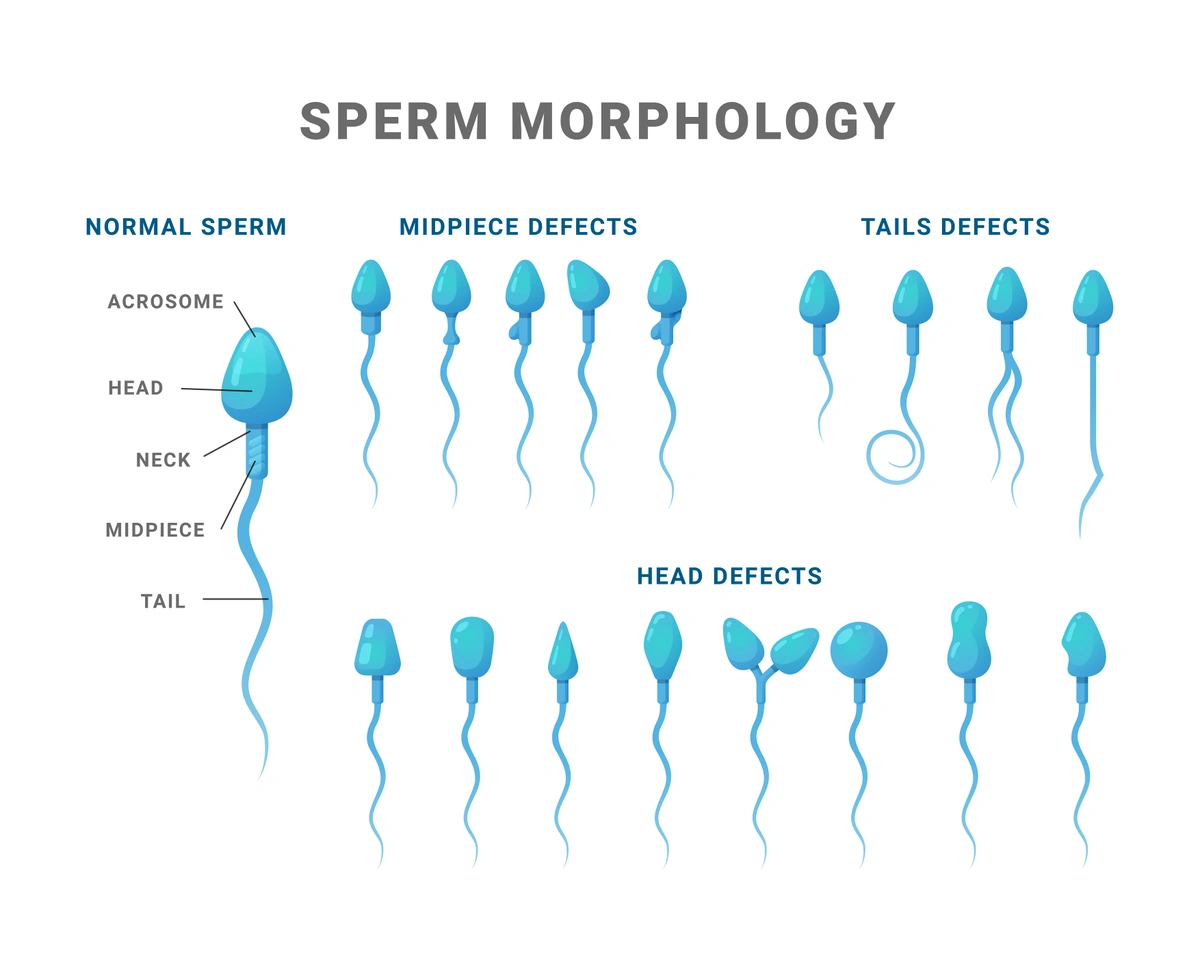
Illustration of sperm morphology defects
Factors That Influence Male Fertility
Both lifestyle and medical factors can affect a man's fertility:
-
Age. Men produce sperm throughout life, but sperm quality gradually declines, generally becoming more noticeable after about age 40.
-
Diet and nutrition. A diet rich in antioxidants, vitamins, and healthy fats supports sperm health; heavily processed diets tend to work against it.
-
Weight. Being significantly overweight or underweight can disrupt the hormones that drive sperm production.
-
Smoking, alcohol, and recreational drugs. All are linked to lower sperm quality.
-
Stress and mental health. Chronic stress can lower testosterone and affect sperm production.
-
Environmental exposures. Pesticides, heavy metals, and endocrine-disrupting chemicals can impair sperm health.
-
Heat. Frequent hot tubs, saunas, or prolonged laptop-on-lap use raise scrotal temperature, which can temporarily reduce sperm production.
-
Medical conditions. Diabetes, hormonal imbalances, infections, and varicocele (enlarged veins in the scrotum) are common contributors, and several are treatable. Significantly low sperm count or motility often has an identifiable, addressable cause.
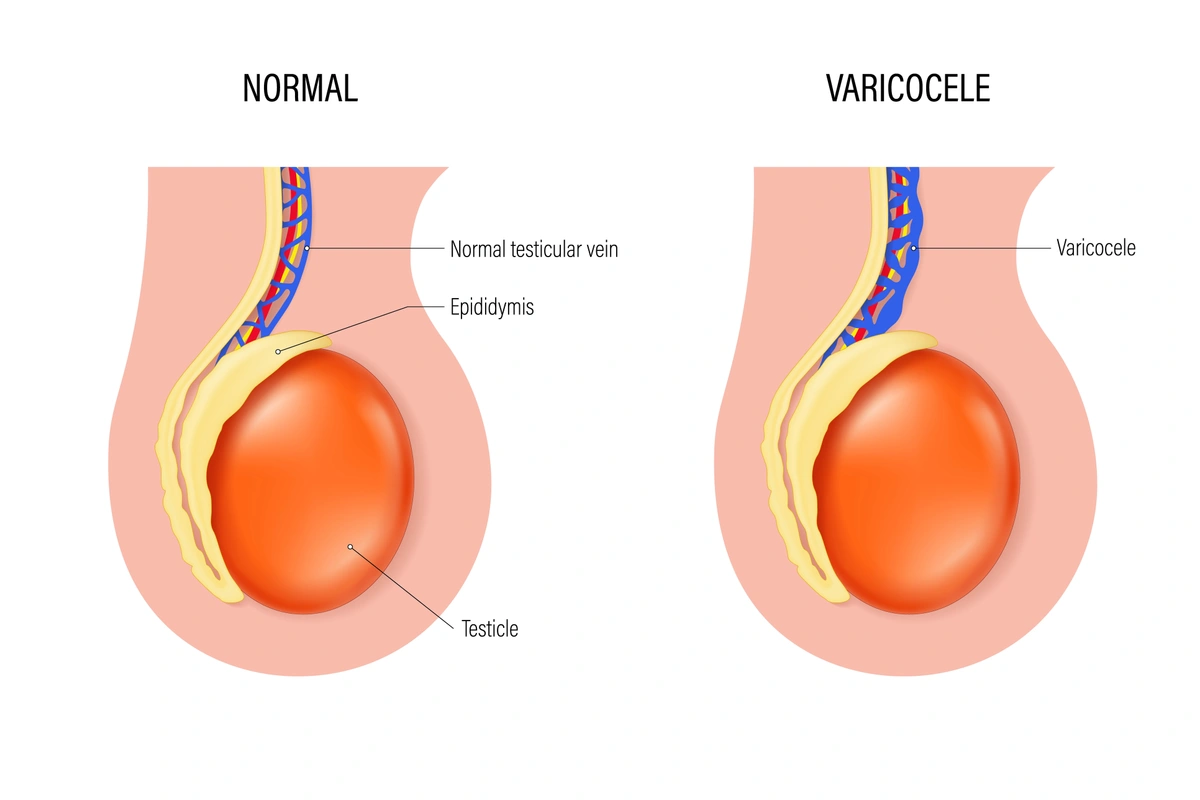
Illustration of varicocele
Testing Male Fertility
If a couple is having trouble conceiving, a semen analysis is usually the first and most important step in evaluating the male partner. It's straightforward, non-invasive, and provides a great deal of information about sperm count, motility, morphology, and overall semen quality.
Because sperm parameters fluctuate — with illness, stress, sleep, and recent lifestyle changes — a single result is only a snapshot. Specialists often repeat the test and interpret it alongside other evaluations. Depending on the findings, additional testing may include hormone bloodwork, a scrotal ultrasound, or genetic screening. You can learn more about our approach to male fertility evaluation.
Treatment Options for Male Factor Infertility
A diagnosis of male factor infertility is rarely the end of the road. Depending on the cause and severity, options generally fall into three categories:
Lifestyle and medical management. Many cases improve by addressing the factors above — optimizing weight, nutrition, and sleep; stopping smoking or marijuana use; and limiting alcohol and heat exposure. When a specific medical issue is found, treating it can restore or improve fertility. For example, a varicocele can sometimes be surgically repaired, and hormonal imbalances may respond to medication.
Intrauterine insemination (IUI). For mild reductions in count or motility, IUI places prepared, concentrated sperm directly into the uterus, shortening the distance sperm must travel and bypassing some barriers to conception.
IVF with ICSI. For more significant male factor infertility, in vitro fertilization (IVF) combined with intracytoplasmic sperm injection (ICSI) is the cornerstone treatment. With ICSI, a single healthy sperm is injected directly into an egg — which means pregnancy is often achievable even with very low sperm counts or poor motility. In some cases of azoospermia (no sperm in the ejaculate), sperm can be retrieved surgically and used with ICSI.
The right path depends on the full picture, including the female partner's evaluation. That's why male and female fertility are always assessed together.
How to Improve Male Fertility
Men can take meaningful, proactive steps to support sperm health:
-
Maintain a healthy weight through balanced nutrition and regular exercise.
-
Avoid smoking, excessive alcohol, and recreational drugs.
-
Manage stress through sleep, movement, and mindfulness or therapy.
-
Limit exposure to environmental toxins where possible.
-
Keep the groin area cool — skip frequent hot tubs and prolonged heat exposure.
One thing to set expectations: sperm take roughly three months to develop, so the benefits of lifestyle changes generally aren't visible on a semen analysis right away. Specialists usually recommend giving changes about 90 days before repeat testing — which is also why two analyses taken two to three months apart give a more reliable baseline than a single test.
When to Seek Help
If you've been trying to conceive for a year without success — or six months if the female partner is over 35 — it's worth consulting a fertility specialist. It's also reasonable to seek evaluation sooner if there's a known risk factor, such as a prior testicular injury, surgery, or medical condition. Because a semen analysis is simple and informative, evaluating the male partner early can save couples significant time.
Frequently Asked Questions
How common is male factor infertility? Very common. It's the sole cause in about one-third of infertility cases and contributes in up to half — which is why both partners should be evaluated.
Can male infertility be treated? Often, yes. Many cases improve with lifestyle changes or by treating an underlying condition, and assisted reproduction — especially IVF with ICSI — makes pregnancy possible even in cases of severe male factor infertility.
Can you have a baby with a low sperm count? Yes. Many men with low counts conceive, sometimes naturally and often with help from IUI or IVF with ICSI, which can achieve fertilization using very few sperm.
Does age affect male fertility? It does, though more gradually than for women. Sperm quality tends to decline with age, generally becoming more noticeable after about 40.
How long does it take to improve sperm health? Because sperm take about three months to develop, give lifestyle changes around 90 days before expecting to see a difference on a repeat semen analysis.
Take the Next Step
Male fertility is a key part of conception — and often a very treatable one. If you have questions or concerns, early action makes a real difference. At Advanced Fertility Center of Chicago, our team evaluates and treats male factor infertility with the same expertise and care we bring to every part of your journey.
Categories
About the AFCC Blog
Welcome to the Advanced Fertility Center of Chicago’s blog! Here, you will find information on the latest advancements in fertility care and treatments, including IVF, IUI, third-party reproduction, LGBTQ+ family building, preimplantation genetic testing, and more. Since 1997, we’ve used our experience and continuous investment in the latest fertility technology to help thousands of patients grow their families. Contact us today for more information or to schedule a new patient appointment.