
Fibroids and Fertility: How Uterine Fibroids Affect Getting and Staying Pregnant
Uterine fibroids are one of the most common conditions in reproductive-age women — and one of the most misunderstood when it comes to fertility. If you've been diagnosed with fibroids and you're trying to conceive, the most important thing to know up front is this: many women with fibroids get pregnant and have healthy pregnancies without any trouble. Whether fibroids affect your fertility depends largely on where they are, how many there are, and how big they are. Here's what the evidence actually shows.
What Are Uterine Fibroids?
Fibroids (also called leiomyomas or myomas) are benign — non-cancerous — growths made of muscle and connective tissue that develop in or on the uterus. They're extremely common: the majority of women will develop at least one by their later reproductive years, and most cause no symptoms at all.
When fibroids do cause symptoms, they can include heavy or prolonged menstrual bleeding (sometimes with anemia), pelvic pressure or pain, a feeling of fullness, frequent urination, and discomfort during intercourse. It's also worth noting that fibroids are more common, tend to appear earlier, and often grow larger in Black and Asian women — which makes awareness and timely evaluation especially important.
Do Fibroids Cause Infertility? It Depends on Location
This is the heart of the matter. Fibroids are grouped by where they grow, and location is the biggest factor in whether they affect fertility.
Submucosal fibroids grow just beneath the uterine lining and bulge into the uterine cavity — the space where an embryo needs to implant. These have the clearest negative effect on fertility. They can interfere with implantation, lower pregnancy and live-birth rates, and increase the risk of miscarriage. Of the three types, these are the ones most likely to warrant treatment when you're trying to conceive.
Intramural fibroids grow within the muscular wall of the uterus. Their effect is the most debated. If they're large or push against and distort the uterine cavity, they can reduce fertility much like submucosal fibroids. Smaller intramural fibroids that don't distort the cavity may have a more modest or no effect, and the evidence on whether removing them actually improves pregnancy rates is genuinely mixed — which is why these decisions are made case by case.
Subserosal fibroids grow on the outer surface of the uterus. These generally do not affect fertility, and removing them typically offers no fertility benefit (though they may still be treated if they're causing symptoms like pain or pressure).
Pedunculated fibroids are a variation on the types above: instead of sitting within the uterine wall, they grow on a stalk. A pedunculated subserosal fibroid extends outward from the outer surface of the uterus on its stalk and, like other subserosal fibroids, generally doesn't affect fertility — though on rare occasions the stalk can twist and cause sudden pain. A pedunculated submucosal fibroid hangs into the uterine cavity on its stalk and, like other submucosal fibroids, can interfere with implantation; it can usually be removed through hysteroscopy.
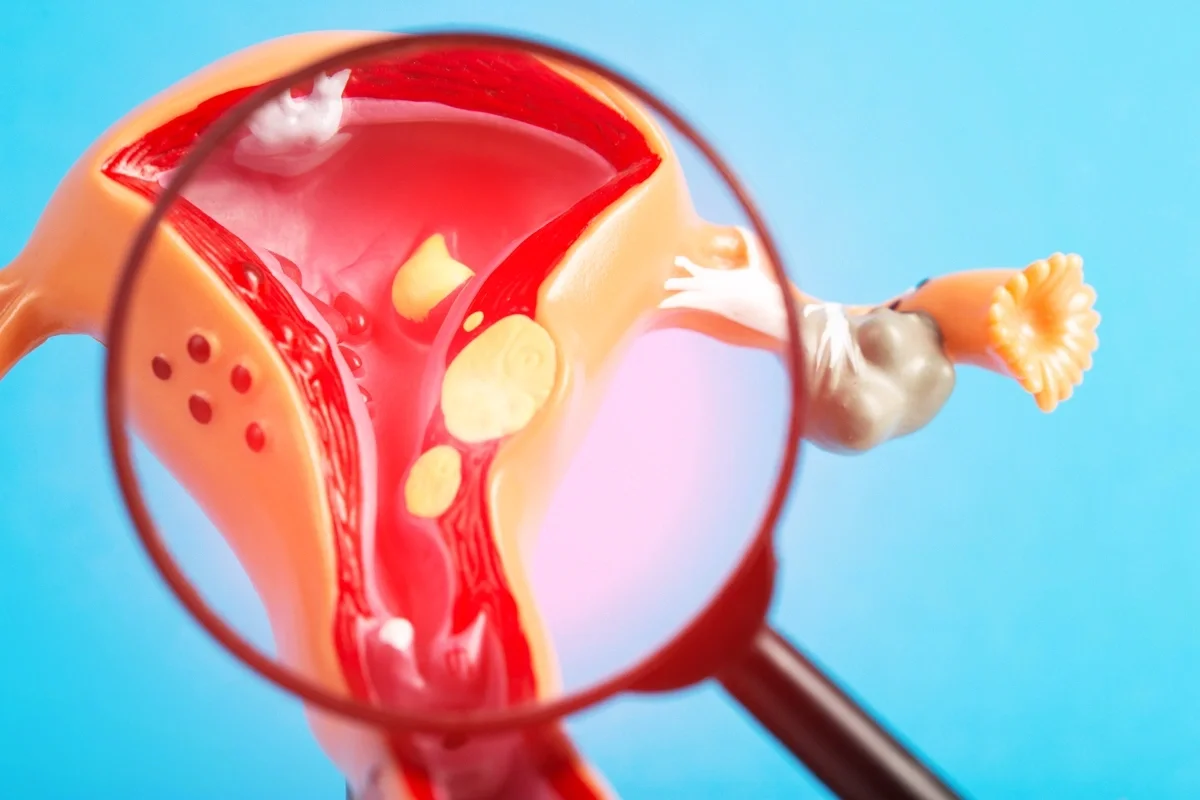
How can fibroids interfere with reproduction? Depending on location, they can distort the shape of the uterine cavity, disrupt blood flow to the endometrium, block the openings of the fallopian tubes, or make the uterine environment less receptive to implantation. Fibroids are considered part of the broader category of uterine disorders that can affect conception.
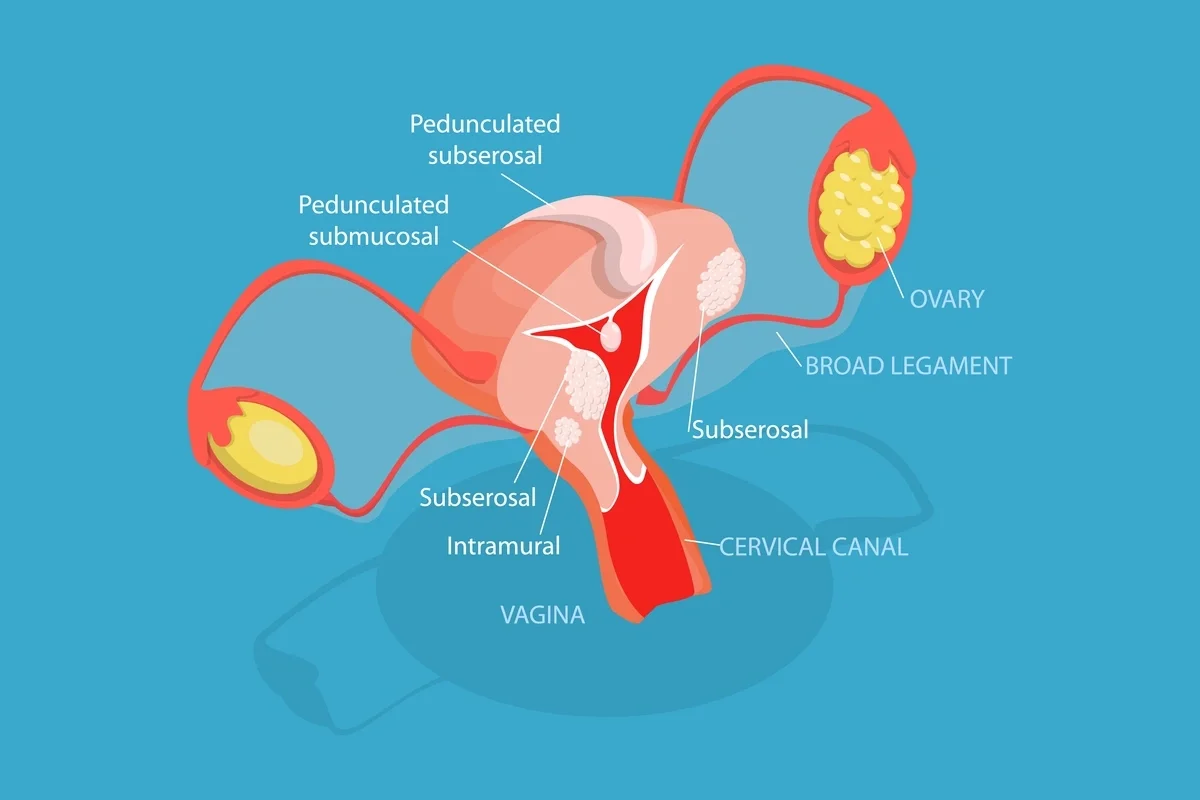
Illustration of the different types of uterine fibroids
Fibroids and Pregnancy
If you conceive with fibroids, the good news bears repeating: most pregnancies proceed normally. That said, certain fibroids — particularly larger or submucosal ones — can grow in pregnancy and raise the risk of complications, including miscarriage, preterm birth, a baby in an abnormal position, or a higher likelihood of cesarean delivery. If you're pregnant and have fibroids, your care team will often monitor them and manage any issues that arise.
How Fibroids Are Diagnosed
Fibroids are usually found through a physical examination and pelvic ultrasound, often transvaginal. To get a clearer picture of whether a fibroid affects the uterine cavity, your physician may use saline infusion sonography (a specialized ultrasound with fluid), a hysteroscopy (a thin camera passed into the uterus), or MRI for detailed mapping when fibroids are large or numerous. Pinpointing the exact location and size is what guides whether — and how — to treat.
Treatment Options When Fibroids Affect Fertility
Treatment is highly individualized, and sometimes the right answer is no treatment at all. Here are the main approaches:
Watchful waiting. If your fibroids aren't distorting the uterine cavity and aren't causing symptoms, your physician may recommend simply monitoring them. Many people conceive without any intervention.
Myomectomy (surgical removal). When treatment is warranted for fertility, surgically removing the fibroid while preserving the uterus is the standard approach. The method depends on the fibroid's location:
-
Hysteroscopic myomectomy removes submucosal fibroids through the vagina and cervix, with no external incisions. Removing submucosal fibroids has good evidence for improving pregnancy rates.
-
Laparoscopic or robotic myomectomy (or, for very large fibroids, an open procedure through a larger abdominal incision) addresses intramural and subserosal fibroids through small incisions.
Medication. Hormonal medications can temporarily shrink fibroids or control heavy bleeding, but the effect is temporary and these are not fertility treatments. They're sometimes used to improve symptoms or to prepare for surgery.
A note on uterine artery embolization (UAE). UAE is a minimally invasive procedure in which a specialist threads a thin catheter to the arteries supplying the uterus and injects tiny particles that block the fibroid's blood supply, causing it to shrink. While it's an effective treatment for fibroid symptoms, it is generally not recommended for women who want to become pregnant, because it can affect blood flow to the uterus and ovaries.
IVF considerations. Fibroids that don't distort the cavity often don't need to be removed before IVF. When a fibroid does distort the cavity, removing it first is frequently advised to improve the odds of success. Your specialist will help you weigh the timing — our guide to when IVF is recommended can help you think it through.
When to See a Fertility Specialist
Consider an evaluation if you have fibroids and are trying to conceive, if you're experiencing heavy bleeding or pelvic pain, or if you've had recurrent pregnancy loss. A specialist can determine whether your fibroids are likely to be affecting your fertility and, if so, what (if anything) to do about it.
Frequently Asked Questions
Can you get pregnant with fibroids? Yes — most women with fibroids can and do. Whether fibroids affect your fertility depends mainly on their location and size, with submucosal fibroids being the most likely to cause difficulty.
Do fibroids always need to be removed? No. Many fibroids — especially subserosal ones and small intramural ones that don't distort the uterine cavity — don't require treatment for fertility.
Will removing fibroids improve my chances of getting pregnant? For submucosal fibroids, there's good evidence that removal improves pregnancy rates. For subserosal fibroids, removal generally doesn't help fertility. For intramural fibroids, the benefit is less clear and is decided case by case.
Can fibroids cause miscarriage? They can increase the risk, particularly submucosal fibroids — though the overall evidence is mixed, and many women with fibroids carry to term without problems.
Can I still do IVF if I have fibroids? Often, yes. Fibroids that don't distort the uterine cavity usually don't need removal before IVF; cavity-distorting fibroids are typically addressed first.
Get Answers Specific to You
Because fibroids affect everyone differently, the most useful next step is a personalized evaluation. The team at Advanced Fertility Center of Chicago can determine whether your fibroids are affecting your fertility and build a plan around your goals. Schedule a consultation today.
Categories
About the AFCC Blog
Welcome to the Advanced Fertility Center of Chicago’s blog! Here, you will find information on the latest advancements in fertility care and treatments, including IVF, IUI, third-party reproduction, LGBTQ+ family building, preimplantation genetic testing, and more. Since 1997, we’ve used our experience and continuous investment in the latest fertility technology to help thousands of patients grow their families. Contact us today for more information or to schedule a new patient appointment.